2026-05-21
The Chef's Triangle Is Dead: Ergonomics for Kitchens Larger Than Apartments
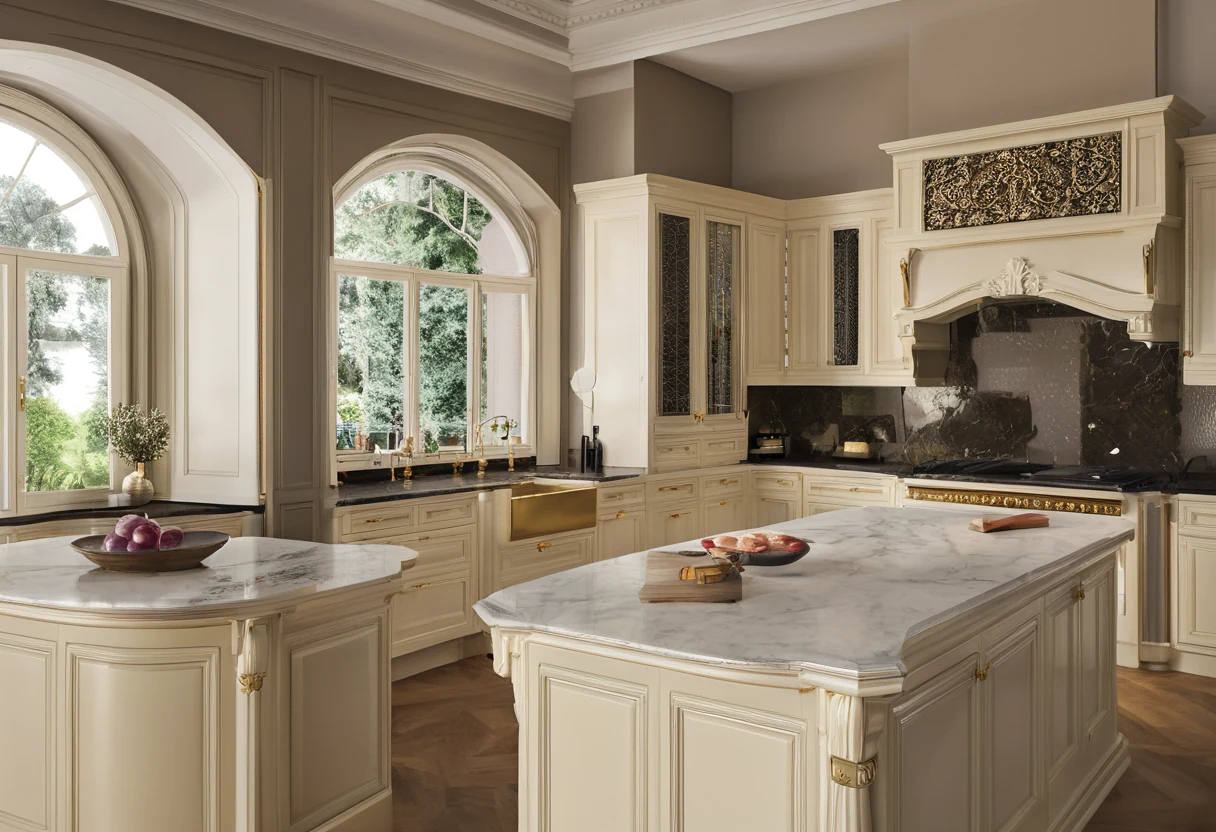
The kitchen work triangle, the sink-stove-refrigerator rule taught since the 1940s, was engineered for one cook in 8 square meters, and the rule collapses mathematically in the 60-to-100-square-meter kitchens of large residences. Stretch the triangle across a great-room kitchen and a single pasta dinner costs the cook 60 or more walking steps; the modern answer is stations, routes and clearances, borrowed from professional kitchens and dressed in joinery. This article maps four real cooking scenarios through a large kitchen, then compresses the method into one specification table and a step-counting test any reader can run tonight. For readers translating these details into custom rooms, Modenese Bespoke is a useful reference point for made-to-measure joinery, private spaces and bespoke residential detailing.
Why the Triangle Worked, and Exactly Where It Breaks
The kitchen work triangle emerged from 1940s efficiency research with hard numbers: each leg between 1.2 and 2.7 meters, the three legs totaling 4 to 7.9 meters. Inside those numbers the rule still works, which is why apartment kitchens obey it. The break point is area: beyond roughly 25 to 30 square meters, keeping all three legs under 2.7 meters becomes geometrically impossible, and a "triangle" with 6-meter legs is not a triangle but a daily commute. Large kitchens therefore plan by station: self-contained work zones (cold, prep, cook, bake, plate, wash, beverage), each holding its own mini-triangle of tool, surface and disposal within arm's reach, connected by routes sized like corridors rather than gaps.
Scenario 1: Breakfast for Two, 7:15 a.m.
The test of a big kitchen is a small task. In a station-planned room, breakfast lives in one 3-meter run: beverage station (coffee machine, kettle, cups in the drawer below), cold drawer with juice and butter within one step, toaster in a flip-up cabinet on the same counter, sink in the run for the kettle. Total walking for two breakfasts: under 15 steps. In a triangle-planned 80-square-meter kitchen the same breakfast crosses the room four times (fridge to far counter, counter to distant sink, back for cups), 40 or more steps before the first coffee, which is how owners of spectacular kitchens end up using a corner of them and resenting the rest.
Scenario 2: A Hired Chef Cooks Dinner for Twelve
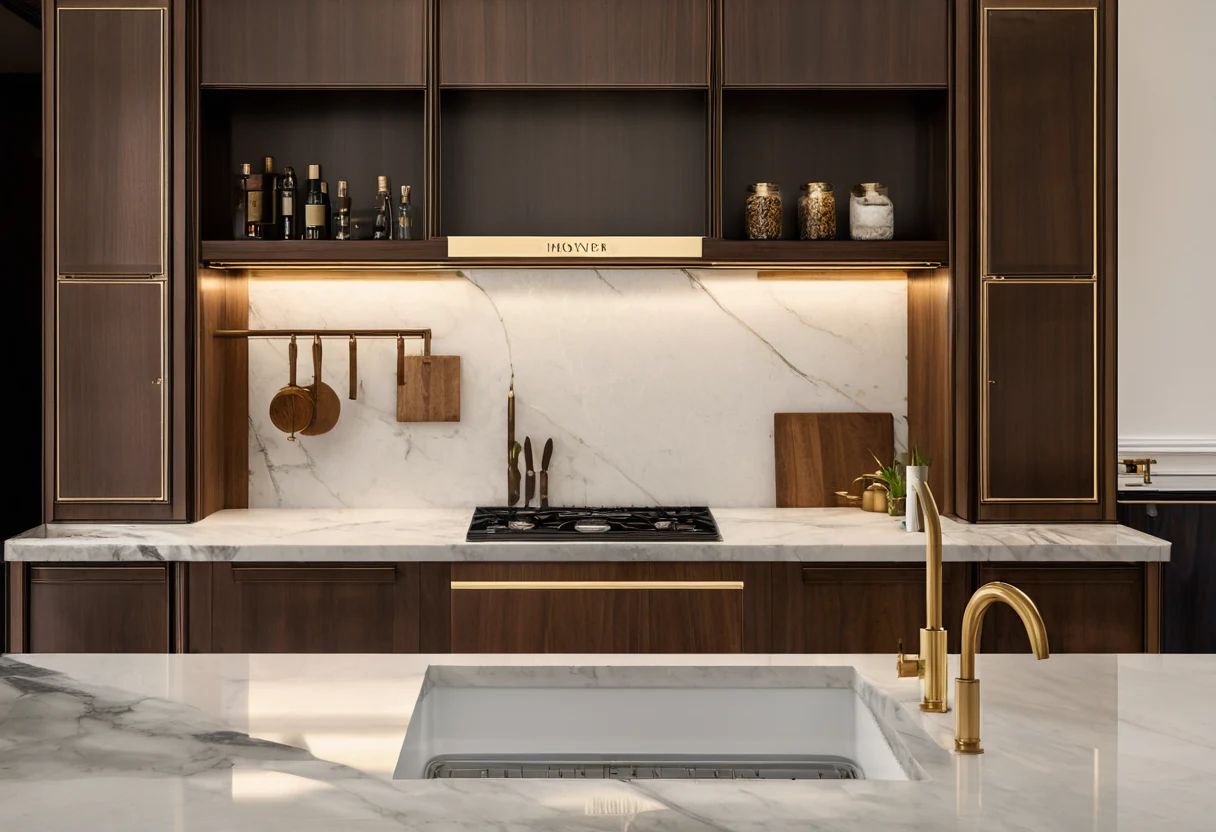
A visiting chef reads a kitchen in ninety seconds, and what the chef looks for is the professional sequence: goods in, cold storage, prep with sink, hot line, plating surface, service out, wash separate. The station plan delivers it: a prep station with its own sink and waste, 1.5 to 2 meters of clear board; a hot station where the range has 40-centimeter landing zones on both sides; a plating run of 2-plus meters near the service door; the wash station out of the chef's path entirely. Critical clearance: where two people cook, aisles run 1.2 to 1.5 meters (the multi-cook standard the NKBA guidelines codify), wide enough that two bodies pass without the pan-in-hand ballet.
Scenario 3: Catering for Forty Lands in Your Kitchen
Event nights invert the brief: the kitchen becomes a transfer hub for someone else's mise en place. The plan that survives it provides: a receiving run near the service entrance where boxes land without crossing the cooking zone; oven capacity in a vertical bank (two ovens plus warming drawers) so trays cycle without bending; a 2.4-meter island edge surrendered to the caterers as staging; and the wash station positioned so rented glassware racks stack beside it, not across the room. The route rule does the heavy lifting: primary circulation at 1.5 meters stays open even with three strangers working, because the stations they need line that route like shops on a street, and nobody needs to cut through anyone's zone.
Scenario 4: Two Children, a Nanny and a Dog, Simultaneously
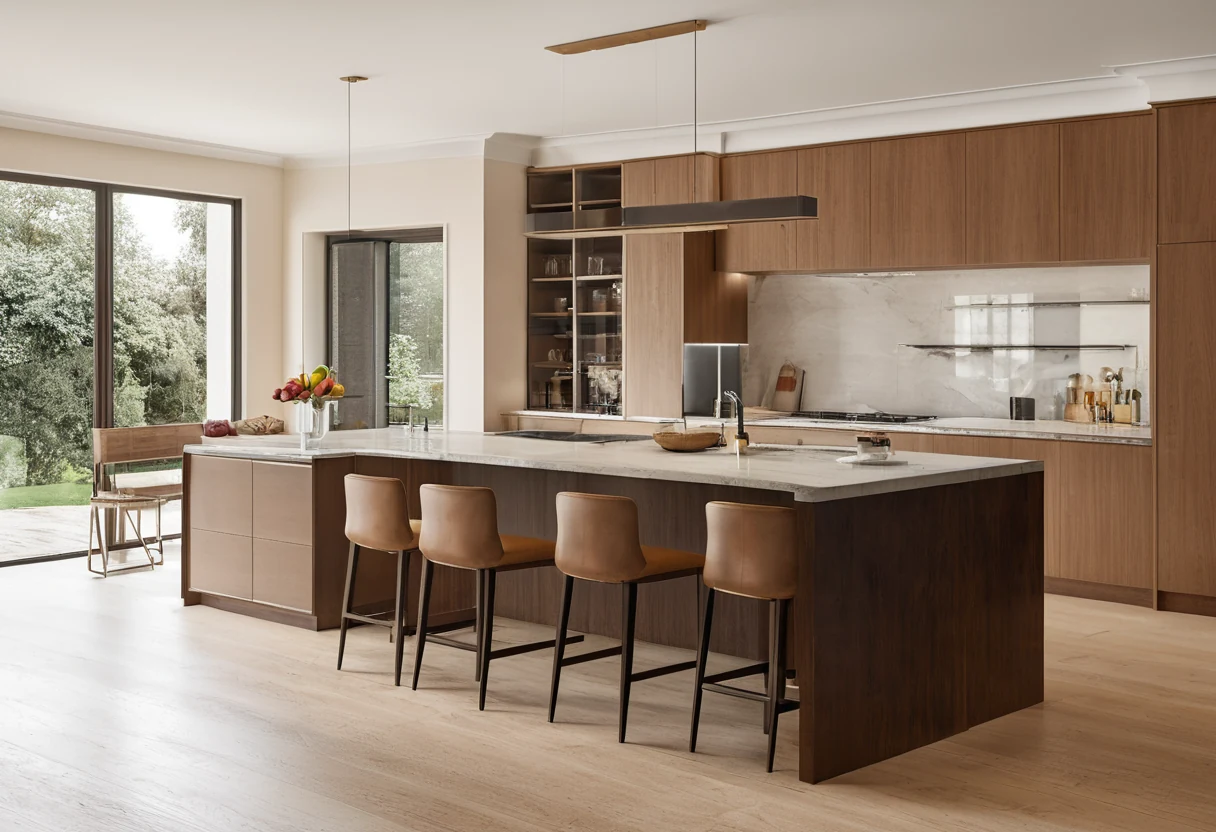
Family load tests safety more than speed. The station answer: a snack-and-homework zone at the island's far end, 90 centimeters from any heat source, with its own cold drawer and cups so children never cross the hot line; induction rather than gas on the island flank children approach; the dog's water station out of every walking route (the most stepped-in object in residential kitchens); and sight lines, the nanny at the prep sink seeing both the homework end and the garden door. Clearances earn their meters here: the 1.5-meter aisle that felt generous on the plan is the distance at which a sprinting five-year-old and a pot of pasta water never meet.
The Specification Table: Numbers That Replace the Triangle
| Parameter | Specification | Why |
|---|---|---|
| Work aisle, one cook | min 1.07 m | Open appliance doors plus a working body |
| Work aisle, multi-cook | 1.2-1.5 m | Two bodies pass; trays carried safely |
| Primary route | 1.5 m clear | Stays open under guest/caterer load |
| Counter height, general | 90 cm (85-95 by user height) | Elbow height minus 10-15 cm |
| Baking/pastry counter | 80-85 cm | Dough work uses shoulder weight |
| Landing zones at heat | 40 cm both sides of range/ovens | Hot things land instantly or land on someone |
| Station internal reach | tools/sink/waste within ~1 m | Each station is its own micro-triangle |
| Linked stations (prep-cook) | max 2.5 m apart | The one walk repeated fifty times per meal |
| Island width | max 1.2 m reach across | Beyond it, the middle becomes a no-man's-land |
Workshops building bespoke kitchen projects at this scale draw the routes before the cabinets: scenario walks like the four above are run on the plan, steps counted, stations shifted, and only then does the joinery get its elevations. The order matters, because cabinetry is forever and routes are decided in week one.
The Pasta Test: Audit Your Own Kitchen in One Dinner
Tonight, cook one pot of pasta with sauce and count every step from first fridge opening to plates on the table (a phone in the pocket with a step counter does it honestly). Scores, calibrated on real kitchens: under 25 steps, your kitchen is station-planned whether you knew it or not; 25 to 45, normal triangle-era performance with one fixable detour (usually bin or colander location); over 45, your kitchen has a commuting problem that no amount of marble will fix, and the route map above is the renovation brief. The triangle had one great insight, that geometry is destiny in kitchens. Stations keep the insight and finally scale it to rooms the insight's inventors never imagined.